-
Asbestos Awarenesss month - Asbestos, the magic mineral turned deadly.
November 15, 2018Asbestos, the magic mineral turned deadly.-

Once hailed as a miraculous mineral, the use of asbestos dates back to historical times. However, the mineral came into mainstream popularity during the Industrial Age. It combined several sought after qualities: light weight, sound absorption, fire resistance, electrical insulation, strength and flexibility. A super hero of a mineral that has gone from miraculous to worldwide menace throughout the course of time.
November is Asbestos Awareness Month, during this period we aim to help raise awareness about the risks of asbestos and how best to manage it. The history of asbestos is a fascinating one, learn more about how we got to where we are today.
Asbestos...a history lesson
Asbestos is a mineral that occurs naturally on every continent in the world and was known as the indestructible mineral fibre amongst our early ancestors. The word asbestos originates from the Latin word ‘amiantus’ for unspoiled and the Greek word ‘asvestos’ meaning inextinguishable.
-
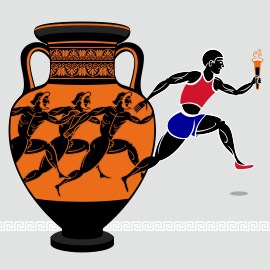
The Ancient World
Archaeologists have uncovered asbestos fibres in debris dating back to the stone age, 750,000 years ago. In ancient times our ancestors experimented with this magical material, it is believed that the history of asbestos use dates back to 4,000 B.C. with the use of asbestos in candle and lamp wicks. Clay cooking pots in Finland dating back to 2,500 B.C. contained asbestos fibres, as they understood that the addition of asbestos strengthened their vessels and made them heat-resistant. Between 2,000 - 3,000 B.C. the Egyptians made asbestos burial shrouds to protect the bodies of their monarchs. Romans weaved asbestos fibres into napkins and tablecloths, they would then throw the tainted items into the fire where food scraps and grime would be burned off leaving only the cloth.
-
Early Asbestos Toxicity Warning Signs: The dangers of asbestos have been known since its discovery more than 3,000 years ago. Strabo,an ancient Greek geographer born 63 B.C., noted a “sickness in the lungs” in slaves that were used to weave asbestos into cloth. Pliny the Elder, born 61 A.D., an ancient Roman scholar called it the “disease of slaves”, after noting they died a premature death after working with asbestos. He also described the use of early respirators by the slave miners constructed from the bladder of a goat or lamb to protect them from inhaling the harmful asbestos fibres.
-

The Middle Ages
Although the use of asbestos dropped off in the Middle Ages and the dangers forgotten through time, the fascination with this mystical natural wonder continued. It is documented that around 755 King Charlemange of France had a tablecloth made of asbestos to prevent it from burning during the accidental fires that frequently occurred during their rowdy feasts and celebrations. After their meals he would throw the cloth into the fire, amazing his guests when it failed to burn and convincing them that he had supernatural powers. Medieval crusaders constructed asbestos bags to hold flaming tar which they catapulted over barricades during battle and the mineral was used in suits of armour for knights and horsemen.
-

The Industrial Revolution
As the world became industrialised and transitioned to new manufacturing processesthe use of powered machinery and steam power became more idespread. The need to effectively and efficiently control the heat required to run these workhorses of the Industrial Revolution took centre stage. Asbestos, due to its magical fire proofing qualities, was found to be the ideal insulator for high-temperature products like steam pipes, turbines, ovens and kilns that kept the wheels in motion enabling the Industrial Revolution. With the increase in demand for asbestos the first commercial asbestos mine opened in 1879 in Quebec, Canada, with further mines opening in Russia, Australia, America, Italy and South Africa.
-
Asbestos Toxicity Warning Signs: In 1899, Dr. Montague Murray noted the negative health effects of asbestos when a 33 year old male patient consulted with him at London’s Charing Cross Hospital. At first he was thought to be a victim of bronchitis, until he mentioned to the doctor that the other nine men who worked with him spinning asbestos all died in their thirties of the same condition. When he passed away less than a year later Dr Murray found the heavy scarring of his lungs that later came to be called asbestosis.
-
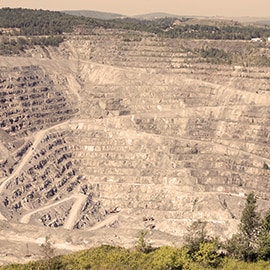
The Modern Day
Moving into more modern times our fascination with the magical qualities of this substance continued. The early to mid 1900’s saw the dramatic increase in asbestos use as asbestos mining spread across the globe to more than 30,000 tonnes annually by the early 1900’s, with production exceeding 109,000 tonnes by 1910. The asbestos industry was unstoppable, with such high demand women and children were added to the asbestos industry workforce, preparing, carding and spinning the raw fibres, while men laboured in the mines. Now a widely available and highly durable resource, its popularity as a building material led it to be extensively used in commercial and residential construction, maritime and automotive industries and consumer goods. In fact it was used in just about everything imaginable, including : hair dryers, floor tiles, toys, oven mitts, gutters, roofing, cladding, insulation, brake pads, clothing, cement products, even cigarette filters and toothpaste. This is not an exhaustive list, scientists and historians have estimated that over 3,000 products may have contained asbestos.
-
Asbestos Toxicity Warning Signs: In the early 1900s researchers began to notice a large number of early deaths and lung problems in asbestos-mining towns and the first documented death related to asbestos was recorded in 1906. Reports of worker deaths from “fibrosis” in asbestos plants around the globe began to be recorded and studies suggested that asbestos workers were dying unnaturally young. As early as 1908, insurance companies in the U.S. and Canada began decreasing coverage and benefits, while increasing premiums, for workers employed in the asbestos industry. In the face of constant health warnings asbestos based products continued to be manufactured and filled the landscape.
Asbestos Today
Around 1977 world demand for asbestos hit its peak with almost 4.8 million tonnes produced per year, with thousands of asbestos laced products produced in 85 countries around the globe. By the late 1970’s thousands of years after the first warning signs were recognised by our early ancestors, asbestos, the miracle substance, began its dramatic decline after the public began to finally come to grips with the facts and understand the link between asbestos and mesothelioma, lung cancer and other crippling chronic respiratory conditions.
-
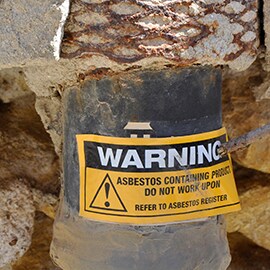
Today, asbestos is banned in more than 50 countries around the globe, however this enemy is still out there, where you’d least expect it, waiting to attack when disturbed from its resting place. Shockingly, bans did not come into effect until many years after the realisation that the magic mineral was in effect a ticking time bomb. Iceland was the first country to ban asbestos back in 1983, Australia in 2003, the European Union in 2005, the United Kingdom in 2006, Turkey in 2010 and Canada in 2018.
Interestingly, the United States is one of the few major industrialised nations without an asbestos ban in place. It continues to be used in gaskets, friction products, roofing materials, fireproofing materials and other products that are used every day. Despite the ongoing evidence and awareness surrounding the dangers of asbestos there are countries in developing nations that continue to mine and consume it in disturbing amounts as its popularity increases due to the high demand of affordable off-the-shelf building materials.
Safety starts with you!
Asbestos is highly toxic, causing a range of lung diseases that are slow to develop but in many cases deadly. While the product has been banned and its use prohibited it is still prevalent and may be lurking where you least suspect it. Whether you work in the construction industry, handle insulation products, install roofs and tiles, manipulate clutch pads or are taking on ambitious home renovations, asbestos could pose a serious threat for your lungs and overall health. The removal of asbestos materials should always be performed by a licensed professional asbestos removalist. However, when renovating or performing maintenance around the home you may come across asbestos containing materials so it’s particularly important you use the correct Personal Protective Equipment at all times.When it comes to asbestos, Go Slow! Asbestos - it’s a NO GO! Visit www.asbestosawareness.com.au to learn what you need to know or reach out to a 3M Safety Specialist if you’re unsure of any aspect of PPE required to safeguard you against potential asbestos hazards.
Below is a selection of educational resources and product solutions related to asbestos awareness and safety.
Asbestos PPE Solutions
-

Asbestos/Dust Reusable Respirator Kits
Convenient respiratory kits designed for asbestos removal and environments containing dust. Kits come complete with either a full face or half face respirator, particulate filters, cleaning wipes and earplugs. Packed in a durable protective case that also aids decontamination practices. For full kit contents and details refer to:
Full Face Kit
Half Face kit -
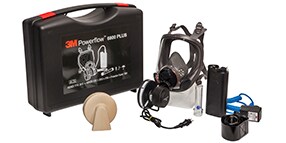
Powered Air Purifying Respirator
The 3M™ Powerflow 6800 Plus Powered Air Purifying Respirator (PAPR) uses a wide view silicone faceseal full facemask connected to a turbo/filter unit. This product may be used in environments where significant levels of fibres are routinely present in the workplace atmosphere. A typical example of such an environment is the removal of friable asbestos and asbestos containing materials.
-