print window close window
3M™ ESPE™ Protemp™ 4 Temporization Material
  • Clinical Cases
  • Technique Guide
Maxillary Anterior and Posterior Restorations
Clinical Case by Dr. Carlos Sabrosa, Rio de Janeiro, Brazil

Initial situation

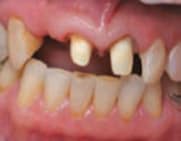
42 year-old female patient presented with teeth UR6, UR7, UR8, UL5, UL6 and UL8 missing in the maxillary arch, and teeth LL5, LL8, LR5 and LR8 missing in the mandibular arch. Composite restorations in the anterior maxillary teeth, and amalgam restorations on existing maxillary premolars need to be replaced.

Treatment plan
After consultation with the patient, a decision was made to place implants in all areas except teeth UR8 and UL8. Final restorations were planned with all ceramic single Lava™ Zirconia crowns on the implants, and natural teeth in the maxilla and in posterior teeth in the mandible. No treatment was required on the lower anteriors.
   

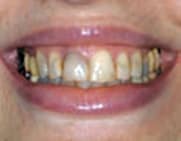
Figure 1
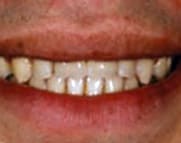
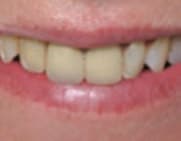
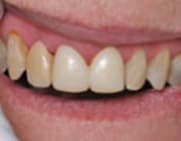
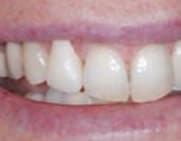
Pre-operative smile view. Composite restorations on anterior teeth and PFM crowns on posterior teeth need replacement.


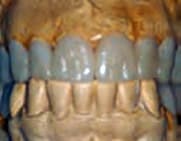
Figure 2
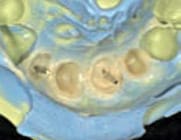
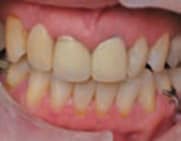
Diagnostic wax-up of proposed treatment plan.

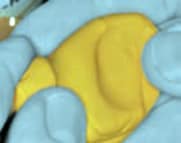
Figure 3
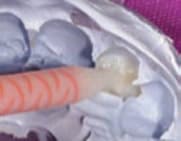
Mixing of 3M™ ESPE™ Imprint™ 3 Putty Soft to make an impression of the wax-up.


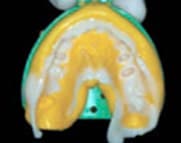
Figure 4
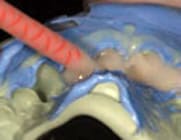
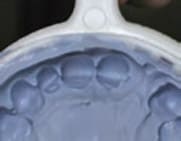
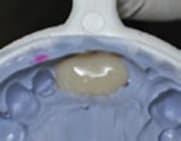
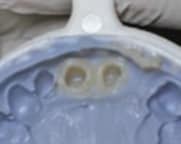
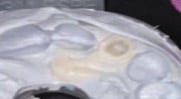
Impression of the diagnostic wax-up. Filled with Protemp™ 4 Temporization Material shade A2.


Figure 5
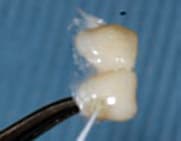
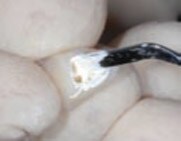
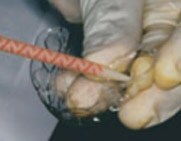
Gauze with alcohol was rubbed on the buccal surface after removal of excess temporization material on the margin.


Figure 6
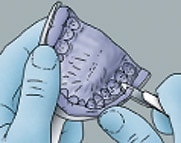
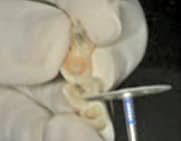
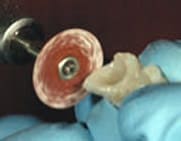
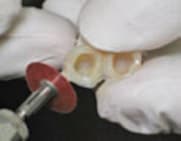
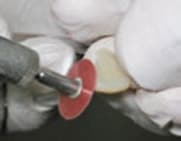
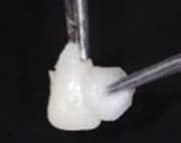
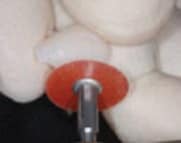
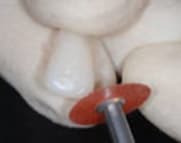
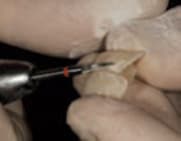
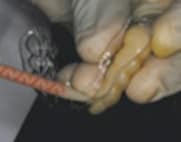
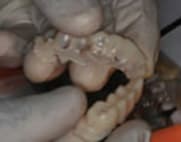
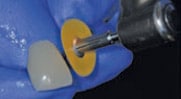
Trimming the interproximal area with a diamond disc.

Figure 7
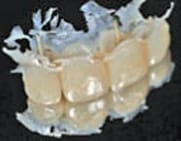
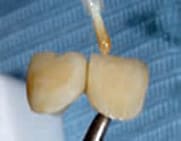
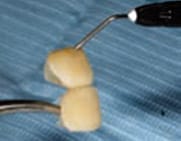
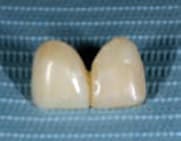
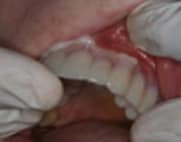
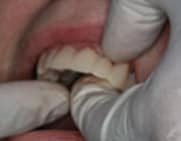
Provisional restoration after trimming.

Figure 8
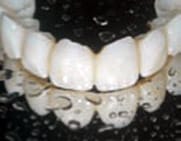
Anterior view of provisional restoration trimming.


Figure 9
Protemp™ 4 provisional restoration cemented with 3M™ ESPE™ RelyX™ Temp NE Temporary Cement.


Figure 10
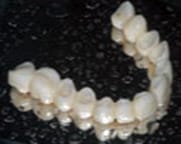
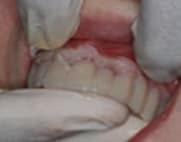
Occlusal view of 3M™ ESPE™ Protemp™ 4 provisional restoration after cementation.

Figure 11
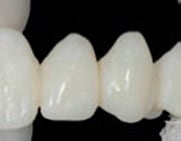
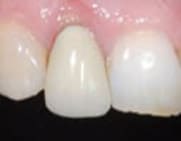
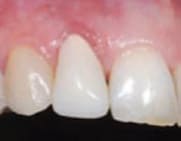
Surface texture and marginal adaptation of the provisional restoration.

Figure 12
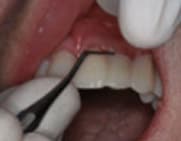
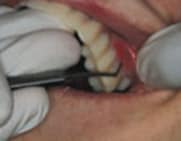
Soft tissue response after one week. Due to the excellent marginal adaptation, healing is achieved in a few days.


Figure 13
Anterior view of soft tissue response after one week.

Figure 14
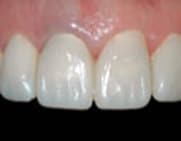
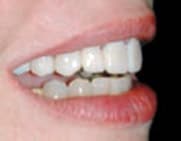
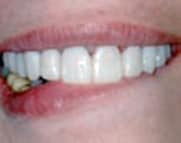
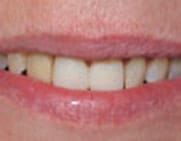
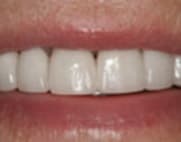
Post-operative smile with 3M™ ESPE™ Protemp™ 4 temporaries.


Figure 15
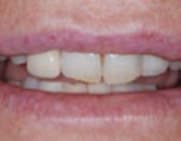
Post-operative smile with temporaries in place.


Copyright © 2011 3M. All rights reserved


Replacement of 4-unit Anterior Bridge
Clinical Case by Dr. Olivier Etienne, Strasbourg, France


Figure 1
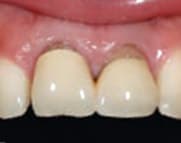
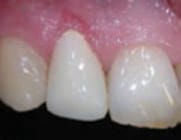
Pre-operative view. Existing restorations with recessed gingiva.


Figure 2
Vestibular view of the upper anteriors. Gingival irritation requires replacing the four crowns.


Figure 3
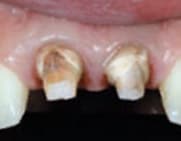
Removal of the existing crowns and new margin preparation.


Figure 4
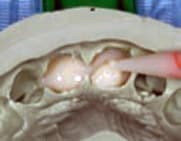
The one step pre-operative impression technique provides an excellent matrix for fabricating esthetic and accurate temporary restorations.


Figure 5
Syringing the 3M™ ESPE™ Protemp™ 4 Temporization Material into the impression.


Figure 6
Removing the matrix; the root pins that were inserted (but not cemented) into the root canal are now fixed within the temporary material.


Figure 7
After removing the 4-unit temporary bridge from the matrix, the inhibition layer is cleaned with alcohol.

Figure 8
Due to the accurate impression, few modifications need to be done. The teeth are still joined, but the embrasures are open.


Figure 9
Final polish.

Figure 10
Cementation of the temporary teeth using 3M™ ESPE™ RelyX™ Temp NE Cement.


Figure 11
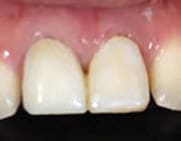
Post-operative view: seated temporary restoration. The newly defined margins and the highly aesthetic qualities of 3M™ ESPE™ Protemp™ 4 Temporization Material are clearly visible.


Figure 12
The temporary restorations done by iso-technique are exactly the same shape and morphology of the pre-operative restorations.

Figure 13
Altering the shape of the 3M™ ESPE™ Protemp™ Plus temporary restorations simulates the appearance of the future final restoration.


Figure 14
During the second appointment, the root pins were cemented and the core build up completed. The tooth colored core build up material supports final esthetics through its translucency.


Figure 15
Post-operative view. The final restorations blend perfectly into the patient’s smile. Lab work done by Dental Laboratory D. Watzki, Illkirch, France.


Figure 16
Post-operative view of final restorations.

Copyright © 2011 3M. All rights reserved


Improving Function and Aesthetics on Upper Central Incisors
Clinical Case by Dr. Joan Margarit Dalmau, Barcelona, Spain

Initial situation

29 year-old male patient presented with two metal ceramic crowns on upper central incisors. Both teeth show gingival recession and are affected by severe endodontic problems. Both crowns had poor fit and low aesthetics.

Treatment plan
The endodontic treatment will be redone on both teeth. Additionally, the margins will be redefined to fulfill functional and aesthetic requirements. 3M™ ESPE™ Protemp™ 4 Temporary Crowns will protect the teeth until seating of the final restorations.
   

Figure 1
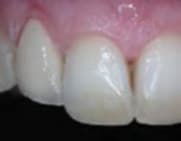
Pre-operative view. Two insufficient single unit crowns on teeth UR1 and UL1 with aesthetic and endodontic failures.


Figure 2
Pre-operative view. The gingiva shows recession exposing the cervical area. Additionally, margin discolorations are present.

Figure 3
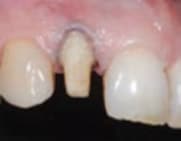
Completed preparation.


Figure 4
Filling the preliminary impression (3M™ ESPE™ Imprint™ 3 Penta Putty) with 3M™ ESPE™ Protemp™ 4 Temporization Material.


Figure 5
Wiping off the inhibition layer with alcohol.


Figure 6
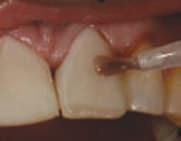
Removing excess material and trimming the margins.


Figure 7
Customization: Using colors to optimally adapt to patient situation.

Figure 8
Using 3M™ ESPE™ Filtek™ Supreme Plus Flowable Restorative to adapt the shape.


Figure 9
Final 3M™ ESPE™ Protemp™ 4 temporary restorations.


Figure 10
Filling temporary cement into the temporary restorations.

Figure 11
Temporary restoration after cleaning off excess temporary cement.


Figure 12
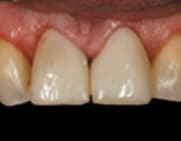
3M™ ESPE™ Protemp™ 4 temporary in place.

Copyright © 2011 3M. All rights reserved


Replacement of Failed Anterior PFM Crowns
Clinical Case by Dr. Brent Fredrickson, St. Paul, Minnesota, USA

Initial situation

Patient presented with an upper removable partial denture and was not interested in a bridge. There was recurrent decay on teeth UR1 and UL1 and patient chose to have those two teeth replaced with all porcelain crowns.

Treatment plan
A treatment plan was formulated to replace existing PFM crowns on teeth UR1 and UL1 with all porcelain crowns.
   

Figure 1
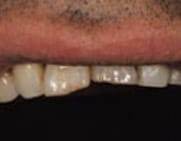
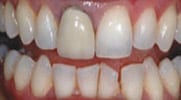
Pre-operative view.


Figure 2
Initial Situation. There is recurrent decay on teeth UR1 and UL1 from existing failed PFM crowns.


Figure 3
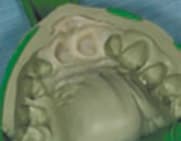
Initial pre-operative impression.


Figure 4
Completed preparations for all ceramic crown teeth UR1 and UL1.


Figure 5
3M™ ESPE™ Protemp™ 4 Temporization Material filled into pre-operative impression.


Figure 6
Protemp™ 4 Temporization Material and pre-operative impression removed from mouth.


Figure 7
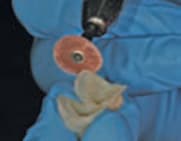
3M™ ESPE™ Sof-Lex™ Disc used to trim excess material.


Figure 8
Sof-Lex™ Disc used to refine margins.

Figure 9
3M™ ESPE™ Protemp™ 4 temporaries ready to cement.


Figure 10
Temporary cement placement.

Figure 11
Final temporaries seated with temporary cement.


Figure 12
Excess cement removed.

Figure 13
Lightly polished and intraoral adjustments made.


Figure 14
Final Protemp™ 4 temporaries.

Copyright © 2011 3M. All rights reserved

Replacement of a Dysfunctional Crown
Clinical Case by Dr. Rakesh Jivan, Royal Leamington Spa, Warwickshire, UK

Initial situation

The patient presented with a complaint of poor aesthetics related to her existing maxillary right lateral PFM. The crown was monochromatic with gingival recession exposing metal margins. In addition, the tooth was much longer than both the UR3 and UR1.

Treatment plan
A treatment plan was formulated to replace the existing PFM with a 3M™ ESPE™ Lava™ Zirconia Crown and restore the chipped central incisors using 3M™ ESPE™ Filtek™ Supreme Plus Restorative at the incisal edges.
   

Figure 1
Pre-operative view. Insufficient single unit crown on tooth UR2.


Figure 2
Pre-operative view. The current crown (PFM) is monochromatic and extends beyond tooth UR1 and tooth UR3.


Figure 3
Completed tooth preparation showing margin with gingival retraction in situ.


Figure 4
Filling the pre-op impression (3M™ ESPE™ Position™ Penta™) with 3M™ ESPE™ Protemp™ 4 Temporization Material.


Figure 5
The matrix with the temporary restoration removed from mouth. Wait for final setting.


Figure 6
Wiping the Protemp™ 4 Temporization Material with alcohol to remove the inhibition layer is sufficient to get to the final surface.


Figure 7
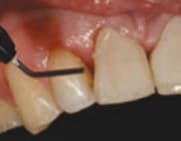
Removing excess material at the margin.

Figure 8
Adjusting the occlusion.


Figure 9
Applying temporary cement.


Figure 10
Placement of the 3M™ ESPE™ Protemp™ 4 Temporary Restoration with temporary cement.


Figure 11
Final temporary restoration in place.


Figure 12
Protemp™ 4 Temporary Restoration on tooth UR2 after 2 weeks wear time.


Figure 13
Final 3M™ ESPE™ Lava™ Zirconia Restoration on tooth UR2 and completed incisal 3M™ ESPE™ Filtek™ Supreme Plus Restorative on teeth UR1 and UL1.


Copyright © 2011 3M. All rights reserved
Replacing Fractured and Abraded Upper Central Incisors
Clinical Case by Dr. Joan Margarit Dalmau, Barcelona, Spain

Initial situation

45 year-old male patient presented with both central upper incisors showing fractures and signs of abrasion.

Treatment plan
Both teeth will be prepared to receive zirconia full ceramic crowns fulfilling the indicated functional and aesthetic requirements. An odontoplastia was performed on the lower incisors to provide adequate space for a good anterior guidance. With the Protemp™ 4 Temporization Material features, it is easy to reshape the anatomy of these teeth on the temporary restorations.
   

Figure 1
Pre-operative view.


Figure 2
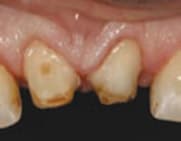
Pre-operative view. Both upper incisors are fractured and abraded.


Figure 3
Completed preparation.


Figure 4
Preliminary impression (3M™ ESPE™ Imprint™ 3 Penta™ Putty) with 3M™ ESPE™ Protemp™ 4 Temporization Material after removing from the mouth.


Figure 5
Removing excess material around the margins.


Figure 6
Prepare temporary for application of colors to adapt to patient situation.


Figure 7
Using colors for customization.

Figure 8
Using 3M™ ESPE™ Filtek™ Supreme Plus Flowable Restorative to customise the shape.


Figure 9
Temporary restoration after temporary cementation.


Figure 10
3M™ ESPE™ Protemp™ 4 temporaries in place.


Copyright © 2011 3M. All rights reserved
Replacement of Discolored Anterior Composite Restoration
Clinical Case by Dr. Paresh Shah, Winnepeg, Manitoba, Canada

Initial situation

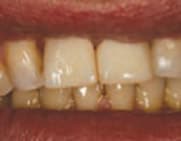
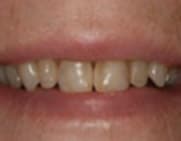
65 year-old female presented with a desire to have a more even and whiter smile. Her anterior teeth had large composite restorations that are discolored and look "blotchy."

Treatment plan
Due to the size of the existing restorations, 3M™ ESPE™ Lava™ Zirconia crowns were chosen for the anterior teeth. The patient also wished to replace teeth UR2 and UR3 with a fixed bridge (3M™ ESPE™ Lava™). Provisionals were fabricated with 3M™ ESPE™ Protemp™ 4 Temporization Material and were made from a diagnostic wax-up. Mounted casts and photographs of the final provisionals were used by the lab to fabricate the final Lava™ Zirconia restorations.
   

Figure 1
Pre-operative view of patient’s smile showing discolored restorations.


Figure 2
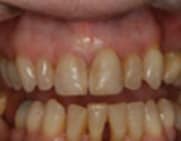
Pre-operative view. Old discolored restorations with uneven shading.


Figure 3
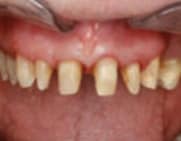
View of the preparations for the Lava™ Restorations.


Figure 4
Syringing of the 3M™ ESPE™ Protemp™ Plus Temporization Material into a vacuum form template which was created from a diagnostic wax-up prior to treatment.


Figure 5
The temporization material is syringed into the entire template at once.


Figure 6
Seating of template with Protemp™ 4 Temporization material over the preparations with excess expressed out.


Figure 7
Material is allowed to set for the recommended time intra-orally.

Figure 8
Provisional is removed from the template in one piece and excess is trimmed carefully.


Figure 9
Provisional is re-seated over the preparations in one piece, to check fit.


Figure 10
Excess flash is carefully removed from the anterior region of the provisional.


Figure 11
Excess flash is carefully removed from the posterior region of the provisional.


Figure 12
Initial view of 3M™ ESPE™ Protemp™ 4 provisional after excess removal.

Figure 13
View of Protemp™ 4 provisionals after cementation with clear provisional cement.


Figure 14
View of provisionals after 5 days prior to any adjustments to length, shape and fabrication of the final restorations.


Figure 15
Post treatment view of final 3M™ ESPE™ Lava™ Zirconia restorations immediately after cementation with 3M™ ESPE™ RelyX™ Unicem Universal Resin Cement.


Figure 16
Post treatment view of smile with final Lava™ Zirconia Restorations.

Copyright © 2011 3M. All rights reserved
Replacement of a PFM Crown
Clinical Case by Dr. Rakesh Jivan, Royal Leamington Spa, Warwickshire, UK

Initial situation

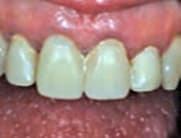
The patient presented with a complaint of poor aesthetics related to her existing maxillary right central incisor PFM crown. The crown was monochromatic with gingival recession exposing metal margins. In addition, the crown margins had been leaking causing decay around the margins.

Treatment plan
A treatment plan was formulated to replace the existing PFM with a 3M™ ESPE™ Lava™ Zirconia crown.
   

Figure 1
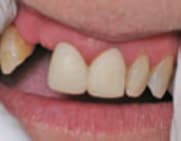
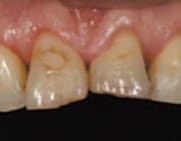
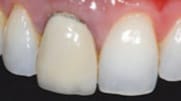
Pre-operative view. Insufficient single unit crown on tooth UR1 with exposed metal margins.


Figure 2
Pre-operative view. The current crown (PFM) is monochromatic and shows very poor crown margins.


Figure 3
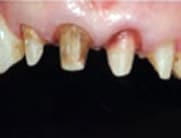
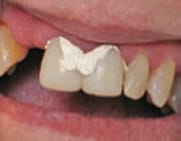
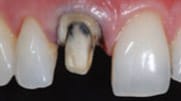
Completed tooth preparation showing the margin with gingival retraction in situ. Note the discoloration of the tooth due to leakage around the PFM crown margins.


Figure 4
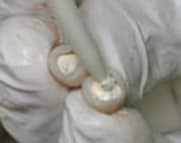
Adjusting the occlusion and final polish.


Figure 5
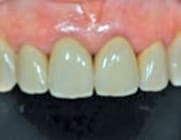
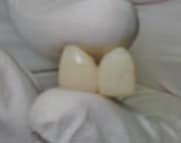
Final view of 3M™ ESPE™ Protemp™ Plus temporary crown.


Copyright © 2011 3M. All rights reserved
Direct Technique Guide


Figure 1
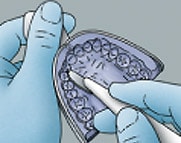
Remove excess material as needed.


Figure 2
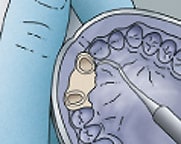
Remove interproximal grooves in impression. (optional)

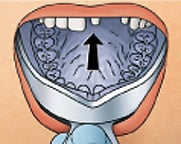
Figure 3
Reposition matrix in the mouth to confirm proper fit.


Figure 4
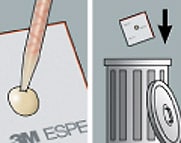
Bleed a small amount of material through the mix tip before dispensing in the matrix.
Discard extruded material.


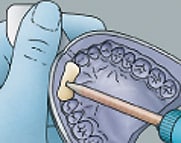
Figure 5
Dispense material into the impression or matrix.


Figure 6
Make sure to fill from the bottom up and to always keep the tip immersed in the temporary material to prevent voids.
(Working time: 40 seconds)


Figure 7
Seat in the mouth and hold firmly in place.


Figure 8
Check setting progress with excess material.


Figure 9
Remove from and matrix mouth between 1:40 and 2:50 min:sec from the onset of mixing.


Figure 10
Leave material in the matrix for 5:00 min:sec for optimal esthetics.
This is important to achieve a smooth and shiny surface.


Figure 11
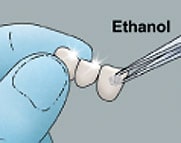
Remove oxygen inhibited layer with alcohol.


Figure 12
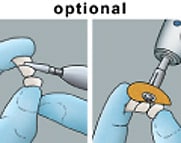
Finish and polish as needed.


Figure 13
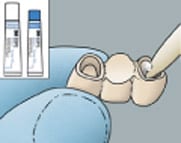
Cement provisional restoration using a temporary cement.


Figure 14
Remove the excess cement.

Copyright © 2011 3M. All rights reserved.