print window close window
3M™ ESPE™ Protemp™ Crown Temporization Material
  • Clinical Cases
  • Technique Guide
Restoration of Posterior Bicuspid Crown
Clinical Case by Dr. Don Erickson, Saint Paul, Minnesota

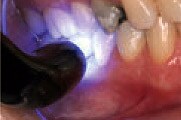
Initial situation

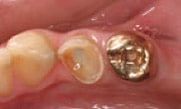
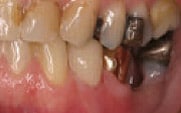
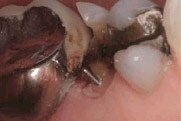
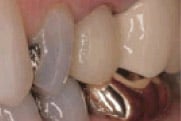
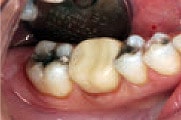
Recurrent decay on the distal surface of tooth No. 20. Due to the fractured buccal cusp and weak unsupported lingual cusp, tooth No. 20 required full crown restoration. The existing crown was removed and an interim temporary restoration was placed using 3M™ ESPE™ Protemp™ Crown Temporization Material, to be followed by a permanent PFM crown.

Treatment plan
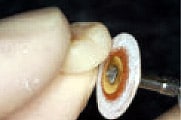
Old amalgam and undercuts were filled in with 3M™ ESPE™ F2000 Compomer Restorative and the surface was finished with a tapered carbide bur. Protemp™ Crown was rolled between gloved fingers for approximately one minute to soften it and the gingival margin was trimmed to the approximate length of the preparation. Protemp™ Crown was placed onto the prepared tooth and shaped to establish a precise fit. The buccal and lingual margins were adapted and occlusal adjustments made, and the buccal, lingual and occlusal surfaces were each tack cured for 2-3 seconds. Protemp™ Crown was removed and all surfaces of the crown were light cured outside of the mouth for a total of 60 seconds. The cured crown was fitted onto the preparation, finished and polished using a composite polishing disc and cemented with temporary cement.
   

Figure 1
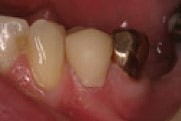
Initial situation: Decay, fractured buccal cusp and unsupported lingual cusp on tooth No. 20, buccal view.


Figure 2
Tooth prep prior to placement of Protemp™ Crown Temporization Material, buccal view.

Figure 3
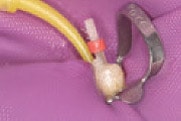
Roll Protemp™ Crown Temporization Material between gloved fingers to soften.


Figure 4
Trim Protemp™ Crown Temporization Material to obtain proper height.

Figure 5
Placement of Protemp™ Crown Temporization Material prep, close to final position.


Figure 6
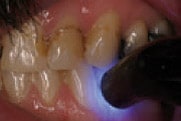
Tack cure of lingual surface.

Figure 7
Protemp™ Crown Temporization Material removed after initial tack cure.

Figure 8
Cementation of Protemp™ Crown Temporization Material in patient’s mouth using temporary cement.


Copyright © 2011 3M. All rights reserved


Emergency Restoration of Fractured Bicuspid
Clinical Case by Dr. Christopher D. Ramsey, Jupiter, Florida

Initial situation

Root canal on fractured tooth No. 21. Patient in poor dental health required emergency restoration. Provided post, core build-up and 3M™ ESPE™ Protemp™ Crown while permanent restoration was fabricated.

Treatment plan
Patient was anesthetized and a non-latex rubber dam was placed. Space for 1.6mm-diameter 3M™ ESPE™ RelyX™ Fiber Post was created using corresponding drill and the post was inserted into canal to check the fit. 3M™ ESPE™ RelyX™ Unicem Self-Adhesive Universal Resin Cement was dispensed into canal using the 3M™ ESPE™ RelyX™ Unicem Aplicap™ Elongation Tip. RelyX fiber post was placed in the canal and light cured for 40 seconds. Direct restorative material was used to create the crown build-up, followed by a 20-second light cure and trimming of the post. After measuring the mesial-distal width of the preparation, the proper size Protemp™ Crown was removed from the package, trimmed and placed onto the prep. The buccal and lingual margins and proximal contacts were adapted and, as the patient bit down, occlusal fit was established. Buccal, lingual and occlusal surfaces were each tack cured for 2-3 seconds and the crown was removed. The crown was lined with 3M™ ESPE™ Filtek™ Supreme Plus Flowable Restorative and tack cured. Protemp™ Crown was light cured for 60 seconds and re-seated onto the prep. The margins were finished to obtain a close fit along the gingival margin and occlusal fit rechecked. An impression was taken for the permanent crown and Protemp™ Crown was cemented using 3M™ ESPE™ RelyX™ Temp NE Temporary Cement.
   

Figure 1
Initial situation: Root canal on fractured tooth No. 21.


Figure 2
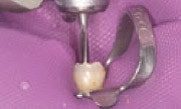
Drill used to widen and shape the canal.

Figure 3
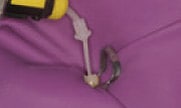
Injecting RelyX™ Unicem Self-Adhesive Universal Resin Cement into canal.


Figure 4
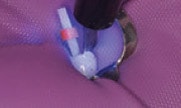
Corresponding RelyX™ Fiber Post placed into canal and light cure of cement.

Figure 5
Crown build-up completed with direct restorative material.


Figure 6
Protemp™ Crown Temporization Material placed onto the preparation and adapted.


Figure 7
Tack cure of buccal surface.

Figure 8
Crown lined with Filtek™ Supreme Plus Flowable Restorative.


Figure 9
Occlusion checked with crown in place.

Figure 10
Placement of Protemp™ Crown Temporization Material with temporary cement.

Copyright © 2011 3M. All rights reserved


Preparation and Restoration of Fractured Bicuspid
Clinical Case by Dr. Robert Margeas, Des Moines, Iowa

Initial situation

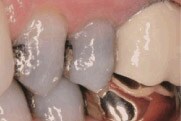
Previously placed large amalgam restoration and a lingual cusp fracture on tooth No. 13. The patient did not like the grayness of the tooth due to amalgam shine-through.

Treatment plan
Amalgam restoration was removed, along with recurrent decay. A titanium pin was placed where the missing cusp was fractured using an electric slow-speed latch-type handpiece. Following core build-up, the tooth was prepared with a diamond bur and a flame-shaped bur to bevel the prep. The mesial-distal width of the preparation was measured to determine the proper size 3M™ ESPE™ Protemp™ Crown. The film was removed and the crown rolled in the fingers to increase malleability. The crown was trimmed following the gingival contour to provide proper height. Protemp™ Crown was seated onto the abutment; margins and proximal contacts were adapted using the fingers and a composite instrument. The patient bit down to form occlusal contacts and the buccal margin was further adapted, after which the buccal surface was tack cured for 2-3 seconds. The patient opened, lingual margin was adapted; lingual and occlusal surfaces were tack cured for 2-3 seconds. The crown was removed for final curing outside of the mouth for 60 seconds and subsequently finished, trimmed as necessary, polished and cemented with temporary cement.
   

Figure 1
Initial situation: Fractured lingual cusp on tooth No. 13.


Figure 2
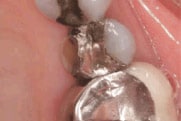
Amalgam shine-through.

Figure 3
Titanium pin placed.


Figure 4
Protemp™ Crown Temporization Material shown in protective liner.


Figure 5
Protemp™ Crown Temporization Material placed on preparation.


Figure 6
Protemp™ Crown Temporization Material adapted with composite instrument.


Figure 7
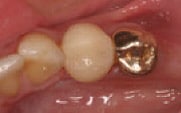
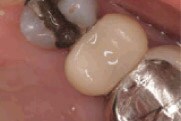
Occlusal view of Protemp™ Crown Temporization Material.

Figure 8
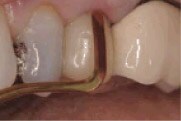
Facial view of temporarily cemented Protemp™ Crown Temporization Material.


Copyright © 2011 3M. All rights reserved


Protemp™ Crown Temporization Material Over an Implant Abutment
Clinical Case by Dr. Robert Margeas, Des Moines, Iowa

Initial situation

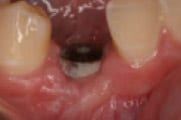
19-year-old woman presented with congenitally missing tooth No. 27. An implant was selected as the most fitting method of completing the patients smile.

Treatment plan
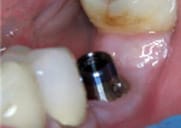
A titanium implant was placed and allowed to integrate for a period of three months. An implant abutment was placed and a polyvinyl impression made for fabrication of the final 3M™ ESPE™ Lava™ Crown. Measurements were taken to determine the appropriate size 3M™ ESPE™ Protemp™ Crown Temporization Material, and the crown was trimmed to the correct height, following the gingival contour. The crown was placed onto the implant abutment for shaping and adaptation to interproximal contacts. The patient was instructed to gently bite down to establish occlusion and adapt the buccal surface. A composite instrument was used to adapt the buccal margin and adjust the occlusion. The buccal surface was tack cured for 2 seconds, held in place while the lingual margin was adapted, and lingual and occlusal surfaces tack cured for 2 seconds. The crown was then removed from the abutment and cured for 30 seconds using the 3M™ ESPE™ Elipar™ Freelight 2 LED Curing Light. The crown was finished using 3M™ ESPE™ Sof-Lex™ Finishing and Polishing Discs and seated with 3M™ ESPE™ RelyX™ Temp NE Temporary Cement.
   

Figure 1
Titanium implant with healing abutment.


Figure 2
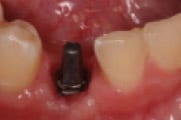
Implant abutment placed.

Figure 3
Protemp™ Crown Temporization Material adapted with composite instrument.


Figure 4
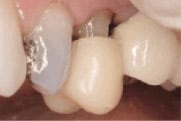
Cemented Protemp™ Crown Temporization Material.


Copyright © 2011 3M. All rights reserved


Emergency Restoration of Dislodged Crown and Core
Clinical Case by Dr. Christopher Hooper, Virginia Beach, Virginia

Initial situation

Dislodged crown and core build-up of tooth No. 30. Initial examination also showed decay present on residual tooth structure. Temporary placement of 3M™ ESPE™ Protemp™ Crown Temporization Material, followed by a 3M™ ESPE™ Lava™ Zirconia Crown.

Treatment plan
Tooth No. 30 was prepared using a chamfer bur and some of the gingival tissue was removed with an electrosurge. After the decay was excavated, 3M™ ESPE™ Filtek™ Z250 Universal Restorative was used to build up the tooth preparation. The mesial-distal width of the prep was measured to select the proper size Protemp™ Crown Temporization Material. The crown was run under warm water for approximately 15 seconds to soften it, and subsequently trimmed, placed onto the prep and adapted to a precise fit. While the patient bit down, the buccal surface was tack cured using the 3M™ ESPE™ Elipar™ FreeLight 2 LED Curing Light for 1-2 seconds. The patient opened for 1-2 seconds for curing of the occlusal and lingual surfaces. The crown was removed from the prep using a conventional sickle scaler and all surfaces were light cured outside of the mouth for 60 seconds. The crown was finished and polished prior to final placement.
   

Figure 1
Initial situation: Dislodged crown and build-up on tooth No. 30.


Figure 2
Removal of gingival tissue, preserving biologic width.

Figure 3
Completed tooth preparation and build-up.


Figure 4
Protemp™ Crown Temporization Material trimmed to approximate height.


Figure 5
Adaption of Protemp™ Crown Temporization Material to the preparation.


Figure 6
Tack cure of buccal surface.


Figure 7
Trim and polish.

Figure 8
Placement of Protemp™ Crown
Temporization Material.


Copyright © 2011 3M. All rights reserved
Protemp™ Crown Temporization Material Over an Implant Abutment
Clinical Case by Dr. Jeffrey Dalin, St. Louis, Missouri

Initial situation

Patient presented with an implant abutment placed by an oral surgeon. At this point the healing process and osseointegration of the implant has occurred.

Treatment plan
A plastic cap was placed over the implant abutment. The cap was removed and roughened with a bur to aid in retention and placed back on the abutment. The 3M™ ESPE™ Protemp™ Crown temporization material was trimmed, tack cured over the plastic cap and removed. 3M™ ESPE™ Filtek™ Supreme Plus Flowable Restorative was added to the Protemp™ Crown temporization material, and the crown material was placed back over the plastic cap and cured for 10 seconds. The Protemp™ Crown temporization material was removed along with the cap and fully cured outside the mouth. Temporary cement was placed inside the plastic cap and seated.
   

Figure 1
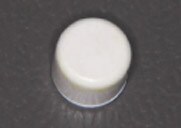
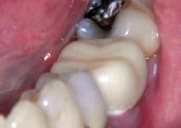
1 Abutment with white cap on tooth #19.


Figure 2
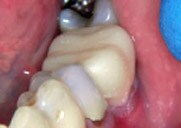
Abutment in place with white cap removed.

Figure 3
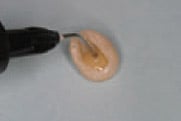
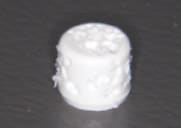
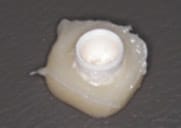
Close up view of white cap.


Figure 4
Surface of white cap roughened with a bur.


Figure 5
Protemp™ Crown trimmed and in place.


Figure 6
3M™ ESPE™ Filtek™ Supreme Plus Flowable Restorative added to Protemp™ Crown.


Figure 7
Protemp™ Crown filled with Filtek Supreme Plus Flowable restorative. It is then placed over the white cap, which has been "snapped" into place on the abutment. Light cure for 10 seconds.


Figure 8
Relined Protemp™ Crown with white cap in place. Cure outside the mouth for 50 seconds.


Figure 9
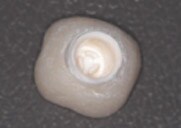
Protemp™ Crown after final curing and trimming.


Figure 10
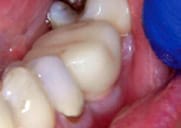
Protemp™ Crown with white cap cemented in place.

Copyright © 2011 3M. All rights reserved
Indication
Temporary Restoration

Tooth Preparation
Prepare tooth using conventional techniques

graphic illustrating tooth preparation
   

Figure 1
Size Selection
Determine the approximate mesial-distal width and temporary crown height using the 3M™ ESPE™ Crown Size Tool. The 3M™ ESPE™ Crown Size Tool is designed for single use.
On the occlusal surface, slide measuring tool between abutment teeth, the wedging point establishes the approximate mesial-distal width
Use the Size Selection Chart on page 4 to select the appropriate size crown
Measure carefully, Protemp Crown is light sensitive and once removed from the sealed crown case it cannot be used at a later date


Figure 2
Protemp Crown Preparation
Remove crown from sealed crown case (slide 2)

Figure 3
Hold film between thumb and finger (slide 3)
Carefully remove film from Protemp Crown


Figure 4
Measure the height of the adjacent teeth as a guide to the amount of excess to be trimmed off the Protemp Crown
Follow the gingival contour when trimming excess material from Protemp Crown


Figure 5
Adaptation
Place Protemp Crown onto the prepared tooth
Adapt, shape and establish interproximal contacts for a snug fit onto the moist preparation


Figure 6
Gently close to adapt buccal surface and establish occlusion
Adapt buccal margin


Figure 7
Adjust occlusion


Figure 8
While patient is in occlusion check buccal margin
Tack cure buccal surface 2-3 seconds DO NOT OVER TACK CURE!


Figure 9
Open mouth for adaptation of lingual surface
Apply finger pressure to buccal surface to prevent dislodging of temporary crown
Adapt lingual margin


Figure 10
Tack cure lingual surface 2-3 seconds
Tack cure occlusal surface 2-3 seconds


Figure 11
Final Cure
Gently remove Protemp™ Crown from the preparation
Light cure outside of the mouth for 60 seconds (fully cure by exposing all surfaces to the light)
Trial fit cured crown and adjust occlusion, trim margin and contour if necessary

* Clean internal surfaces with alcohol to remove the inhibition layer.


Figure 12
Finish & Polish
Finish using a fine carbide bur and/or 3M™ ESPE™ Sof-Lex™ Contouring and Polishing Discs
Polish Protemp™ Crown using a dry muslin rag wheel or polishing brush


Figure 13
Temporary Cementation
Isolate the teeth
Prepare temporary cement
Apply cement to the internal surface of the Protemp Crown


Figure 14
Slowly seat the crown
Gently close into occlusion

Figure 15
Remove excess cement
Floss interproximal areas


Copyright © 2011 3M. All rights reserved.